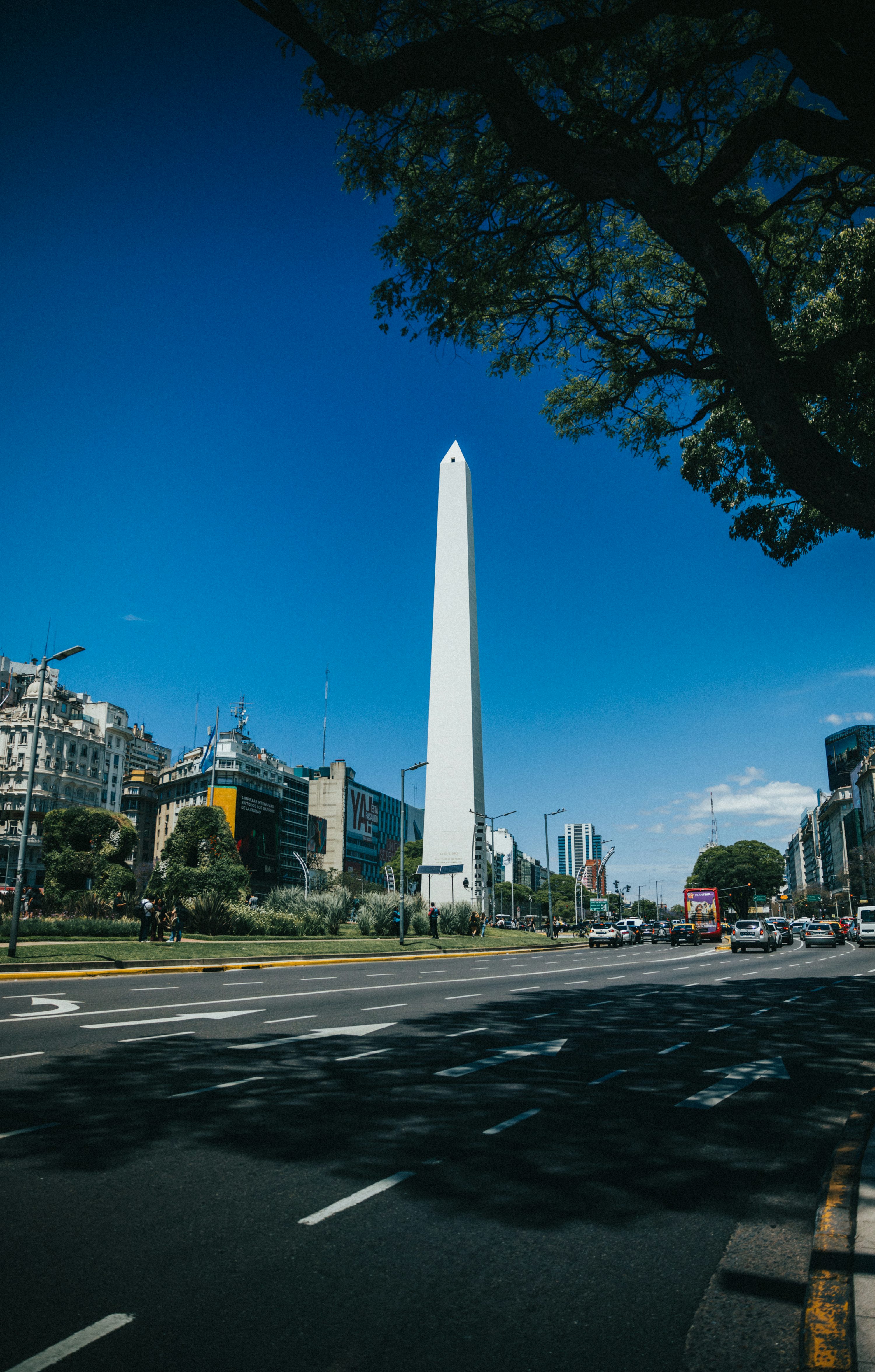
Argentina is one of the most geographically and culturally diverse countries on earth. From the cobblestoned neighbourhoods of Buenos Aires, where tango spills out of milongas into the streets, to the raw edge-of-the-world drama of Patagonia, the country rewards travellers who push beyond the obvious. Add Mendoza's world-famous wine country, the subtropical spectacle of Iguazú Falls, and the lake-district charm of Bariloche, and you have a destination that can genuinely fill a month without ever feeling repetitive.
- Suggested duration: 14–21 days
- Best time to visit: October to April (varies by region)
- Budget: Mid-range: $90–$160/day
Argentina demands to be taken seriously as a travel destination. It's a country where a single asado lunch can stretch to four hours, where a glacier the size of a small city advances into a turquoise lake with a crack like thunder, and where the most sophisticated baristas in the southern hemisphere will argue passionately about the correct temperature for a cortado. It's passionate, maddening, beautiful, and utterly unlike anywhere else on earth.
Buenos Aires — The Paris of the South
Argentina's capital earns its famous nickname not through imitation but through its own brand of elegant, slightly melancholy grandeur. Vast tree-lined boulevards, European-style architecture, world-class steakhouses, and a cultural life of astonishing richness make Buenos Aires one of the great cities for long, unhurried travel.
- La Boca & Caminito: The corrugated iron houses painted in vivid colours along this famous alley are genuinely photogenic — though the real Buenos Aires of La Boca lies in the streets just beyond the tourist strip, where the working-class neighbourhood carries on its daily life.
- Palermo & San Telmo: Palermo's sub-barrios — Soho, Hollywood, Chico — are the best address for restaurants, concept stores, and the city's incredible weekend parks. San Telmo is older and edgier, centred on its antiques market and the bohemian energy around Plaza Dorrego.
- Tango: Buenos Aires is the undisputed home of tango, and experiencing it properly means attending a milonga — a real social dance venue — rather than a tourist dinner show. El Arranque in Balvanera or La Viruta in Palermo are both excellent starting points.
- MALBA & Recoleta: The Latin American Art Museum (MALBA) houses a superb collection of 20th-century Latin American masters. Nearby, the Recoleta Cemetery is one of the world's most architecturally extravagant burial grounds — a genuine unmissable.
Patagonia — End of the World Wilderness
Few places on earth match Patagonia for raw, untamed drama. Argentina's southern tip is a land of jagged granite peaks, ancient forests, vast wind-scoured steppe, and ice fields that feel genuinely primordial. It's a long way to go, but travellers who make the journey rarely regret it.
- Perito Moreno Glacier: Near El Calafate, this is one of the few glaciers in the world that is not retreating — and watching a car-sized chunk of blue ice calve into Lago Argentino is a spectacle that photographs simply cannot capture. Accessible walkways allow you to get remarkably close.
- El Chaltén & Mount Fitz Roy: Argentina's trekking capital sits at the base of one of the world's most dramatic mountain silhouettes. The classic hike to Laguna de los Tres rewards strong walkers with a front-row view of Fitz Roy rising above a glittering glacial lake.
- Tierra del Fuego: The island at the continent's southernmost tip offers a combination of penguin colonies, beaver-dammed forests, and the world's most southerly city, Ushuaia — a genuine end-of-the-world feeling that has drawn adventurers for over a century.
- Wildlife in Peninsula Valdés: On the Atlantic coast of Patagonia, this UNESCO World Heritage site is one of the best places on earth to see southern right whales (June–December), orcas hunting sea lions, Magellanic penguins, and elephant seals.
Mendoza — Wine Country & the Andes
Sitting at the foot of the Andes at 750 metres elevation, Mendoza is the world capital of Malbec and one of the most pleasant wine regions anywhere for a leisurely few days of cycling, eating, and drinking. The backdrop of the snow-capped Cordillera makes every vineyard photograph spectacular.
- Malbec wine tours: The Luján de Cuyo and Maipú valleys are the heartland of Argentine Malbec. Dozens of wineries offer tastings and tours — Achaval Ferrer, Zuccardi, and Catena Zapata represent different ends of the scale from boutique to grand estate.
- Aconcagua: At 6,961 m, Aconcagua is the highest peak outside Asia. Non-climbers can trek to the base camp area through spectacular Andean scenery on multi-day expeditions from Mendoza.
- Olive oil & empanadas: Mendoza's food culture extends well beyond wine — the region produces exceptional olive oils, and the local empanadas (filled with slow-cooked beef and hard-boiled egg) are among the best in the country.
- Rafting on the Mendoza River: Class III–IV rapids make for an excellent half-day of white-water rafting with the Andes providing a genuinely cinematic backdrop.
Iguazú Falls & the Northeast
The border between Argentina and Brazil is split by one of the greatest natural spectacles on the planet — 275 separate waterfalls spreading nearly 3 km across, with the thundering Devil's Throat at their centre. It's the kind of place that makes every other waterfall you've seen feel slightly ordinary by comparison.
- Argentine side vs Brazilian side: The Argentine side (accessed from Puerto Iguazú) puts you inside the falls — walkways extend into the spray and you walk alongside curtains of crashing water. The Brazilian side gives the classic panoramic view. Both are worth it; a two-country crossing is easily arranged.
- Iguazú National Park: Beyond the falls, the surrounding Atlantic Forest is home to toucans, coatis, capuchin monkeys, and — if you're lucky — tapirs and jaguars. Early morning walks on the upper circuit before the crowds arrive are magical.
- Jesuit missions: The ruined Jesuit missions of San Ignacio Miní (UNESCO listed) make for a compelling half-day stop en route — the red sandstone ruins carry a powerful, complicated history.
Practical Tips for Argentina
Argentina rewards travellers who do a little planning in advance, especially around currency, distances, and regional timing. The country is huge — domestic flights save enormous amounts of time and are relatively affordable.
- Getting around: Domestic flights with Aerolíneas Argentinas or Flybondi connect Buenos Aires to Bariloche, El Calafate, Iguazú, and Mendoza quickly. Long-distance overnight buses are comfortable and popular, but Patagonia especially eats days of overland travel.
- Currency & money: Argentina's economy is complex — use official exchange channels and pay attention to current conditions before you travel, as the situation changes frequently. Credit cards are widely accepted in cities and tourist areas.
- Regional timing: Patagonia is best from November to March (austral summer); Iguazú is best avoided in January–February heat; Mendoza grape harvest (vendimia) in March is spectacular; Buenos Aires is wonderful year-round but best in spring (Oct–Nov) and autumn (Mar–Apr).
- Food culture: Dinner happens late in Argentina — restaurants fill up at 9 or 10 pm and kitchens run until midnight. Embrace it. The country's beef, empanadas, medialunas, and dulce de leche are genuine national treasures worth exploring properly.