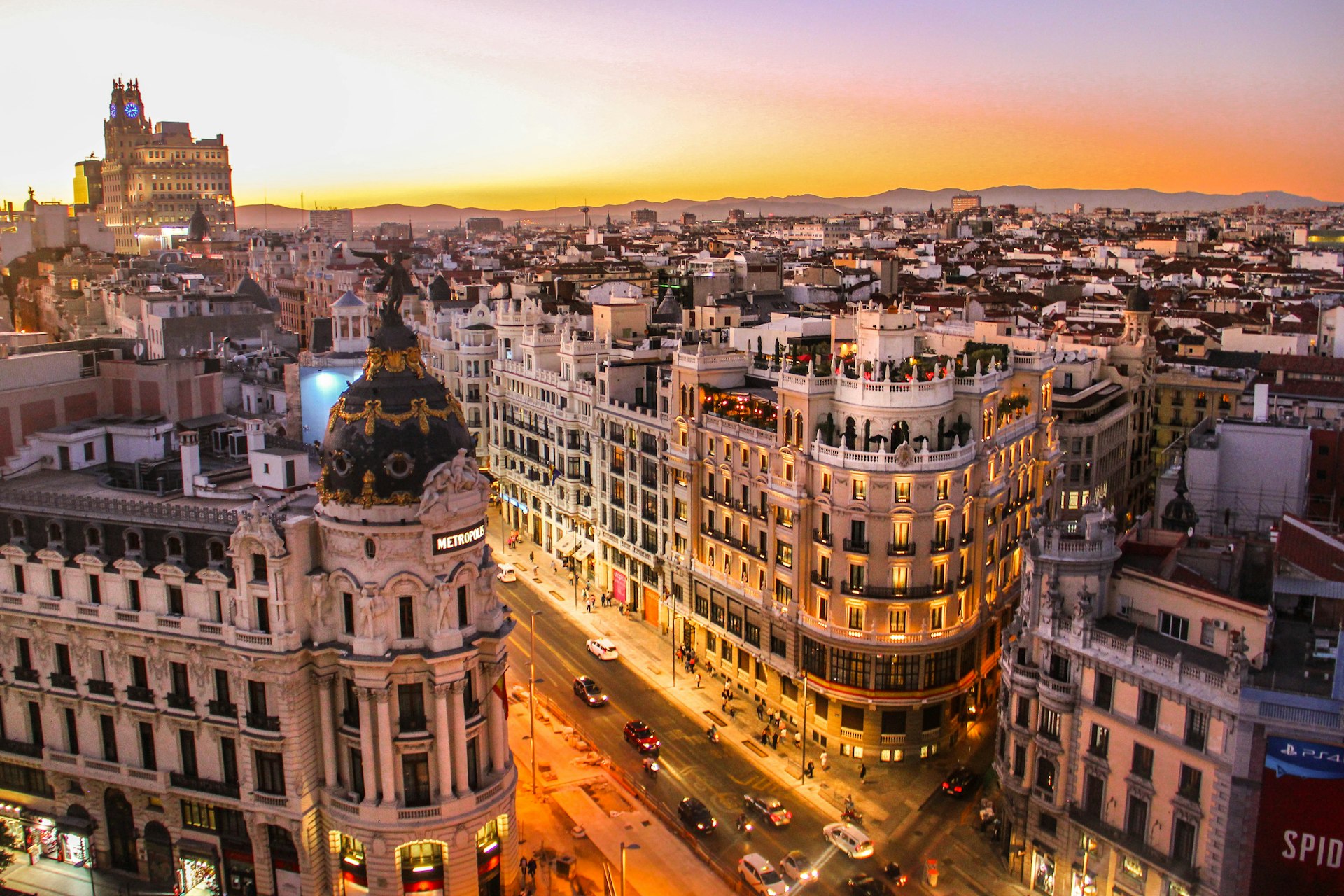
Barcelona is a city that overwhelms the senses in the best possible way — Gaudí's fantasy architecture rising above Gothic Quarter labyrinths, world-class tapas bars humming until midnight, and a Mediterranean shoreline just minutes from the city's cultural heart.
- Suggested duration: 3–5 days
- Best time to visit: Apr–Jun & Sep–Oct
- Budget: $$$
Barcelona has a quality that few cities manage: it is simultaneously one of the most visited places in Europe and one of the most rewarding to visit. Its genius lies in the layering — Roman foundations beneath medieval stone, modernist facades above Gothic arcades, and a food culture that spans market stalls and Michelin temples with equal conviction. Come for Gaudí, stay for everything else.
Gaudí's Barcelona: A City Reshaped by One Imagination
No architect has left a more complete imprint on a city than Antoni Gaudí on Barcelona. The Sagrada Família, his unfinished basilica, has been under construction since 1882 and remains the most visited site in Spain — and yet it still astonishes on every visit, particularly the interior, where light fractures through kaleidoscopic stained glass into a forest of stone columns. Park Güell, draped across a hillside in the upper city, offers Gaudí's most exuberant public work: a mosaic terrace overlooking the city's rooftops. Casa Batlló and Casa Milà (La Pedrera) on the Passeig de Gràcia compete for the title of most extraordinary residential building in the world. Allow a full day for the Sagrada Família alone.
The Gothic Quarter and El Born
Barcelona's old city rewards aimless wandering. The Gothic Quarter — Barri Gòtic — conceals Roman temple columns inside a medieval courtyard, and its narrow lanes lead without warning to beautiful squares where locals nurse coffee alongside tourists. Adjacent El Born is the neighbourhood with the most concentrated pleasure per square metre: excellent restaurants, independent bookshops, the Picasso Museum, and the extraordinary Mercat de Santa Caterina, whose undulating mosaic roof is itself a work of art.
Eating and Drinking
Barcelona's food scene operates across registers that few cities can match. The Mercat de la Boqueria on La Rambla is tourist-heavy but still magnificent for a morning coffee and fresh fruit; the Mercat de l'Abaceria in Gràcia is more neighbourhood in character. The Eixample's restaurant density rivals any city in Europe, with tapas bars serving perfect patatas bravas and croquetes de jamón alongside wine lists of serious depth. For a more elevated experience, the restaurants in the hills above the city — including several with Michelin recognition — offer tasting menus that draw on Catalonia's remarkable larder.
The Eixample and Modernisme
The grid-planned Eixample district, designed in the 19th century by Ildefons Cerdà, is itself an architectural achievement: blocks with chamfered corners to create light and movement at every intersection. Walk the Manzana de la Discordia block on Passeig de Gràcia to see three competing modernist masterpieces — Gaudí's Casa Batlló, Domènech i Montaner's Casa Lleó Morera, and Puig i Cadafalch's Casa Amatller — within a hundred metres of each other.
Practical Considerations
Barcelona demands a degree of planning. Key advice for a rewarding visit:
- Book the Sagrada Família weeks in advance — timed entry slots sell out consistently
- Stay in El Born or Eixample for the best combination of access and neighbourhood character
- Avoid July and August if possible — heat and crowds are both at their peak
- September is arguably the finest month: warm sea, fewer visitors, and the La Mercè festival filling the streets
- The Metro is excellent — a T-Casual card of 10 trips covers most urban movement comfortably
Barcelona is a city that gives back in proportion to the attention you bring to it. The tourists on La Rambla represent only the surface; the real city lies in its markets, its neighbourhood bars, its hilltop parks, and its extraordinary concentration of architectural ambition compressed into a few walkable kilometres.