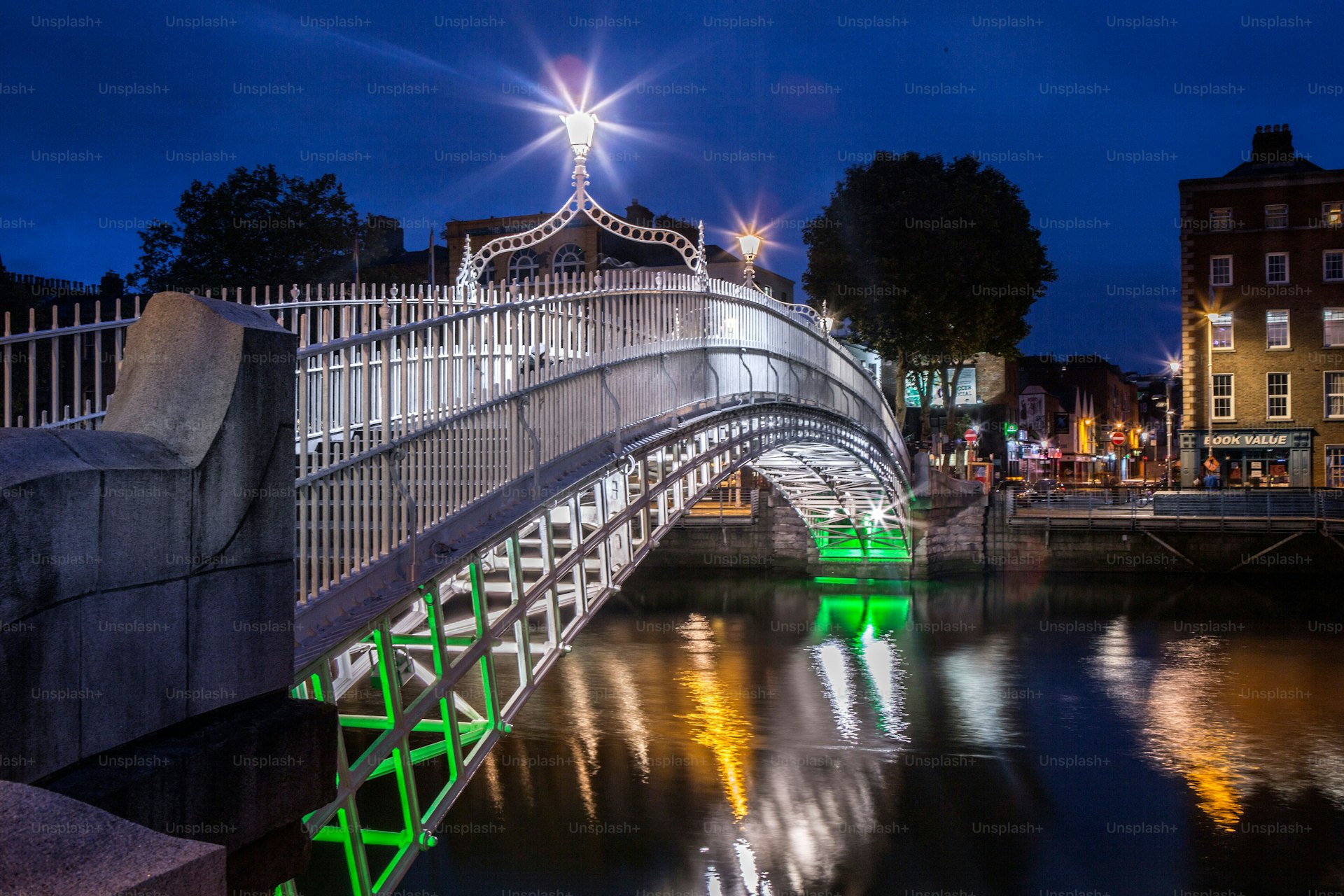
Dublin is a city that wears its history with easy confidence — Georgian squares and Viking foundations, the world's greatest collection of medieval manuscripts, and a pub culture that remains the most convivial in Europe, where a pint of Guinness and a good conversation are considered inseparable.
- Suggested duration: 2–4 days
- Best time to visit: Apr–Sep
- Budget: $$$
Dublin is compact, walkable, and inexhaustibly interesting — a capital city that has retained the scale and warmth of a large town while developing a cultural and culinary scene of genuine international calibre. The River Liffey divides it neatly into north and south, though the real divisions are more nuanced: the Georgian southside of Merrion Square and Fitzwilliam Street, the creative energy of the Liberties and Portobello, the literary pilgrimage routes around Westland Row and the Martello towers, and the raw, raucous good humour of the northside quays. Three or four days spent properly exploring Dublin leaves most visitors wondering why they didn't allow for more.
Trinity College and the Book of Kells
The Long Room of Trinity College's Old Library is one of the great interiors of the world — 65 metres of dark oak shelves rising two storeys, lined with 200,000 of the library's oldest books, and presided over by marble busts of philosophers and scientists of sufficient gravity to make even the most irreverent visitor lower their voice. The Book of Kells, the illuminated gospel manuscript produced by Celtic monks around 800 AD, is displayed in the Treasury below — four volumes of such intricate, inventive beauty that they still provoke genuine astonishment after twelve centuries. Arrive early; the Long Room is less overwhelming before the tour groups find it.
- Merrion Square: Oscar Wilde's house, the National Gallery, and the finest collection of Georgian doorways in Europe
- Dublin Castle: The State Apartments and the medieval undercroft — a thousand years of Irish political history in a single complex
- The National Museum: The Tara Brooch, the Ardagh Chalice, and the Iron Age bog bodies — Ireland's greatest collection of antiquities, and free to enter
The Pub and the Tradition
Dublin's pub culture is not a performance for tourists; it is the city's living room, and it has been for three hundred years. The Victorian interiors of Mulligan's on Poolbeg Street, the snugs of Kehoe's on South Anne Street, and the literary associations of Davy Byrne's (where Leopold Bloom ate his gorgonzola sandwich in Ulysses) provide the backdrop; the real entertainment is the conversation. Traditional music sessions happen most evenings in the older establishments of the Liberties and Temple Bar — arrive early for a seat. The Guinness Storehouse at St James's Gate is the most-visited attraction in Ireland and worth an hour of anyone's time, particularly the rooftop Gravity Bar with its 360-degree view of the city.
Eating in Dublin
Dublin's restaurant scene has matured enormously. The city now offers everything from precise modern Irish cooking — native oysters, Wicklow lamb, farmhouse cheeses — to internationally serious dining rooms that would hold their own in any European capital. Hatch & Sons in the National Museum basement, Chapter One on Parnell Square, and Forest & Marcy on Leeson Street represent the range well. The covered Georges Street Arcade, Dublin's oldest market, provides a more spontaneous form of lunch; Fallon & Byrne on Exchequer Street stocks one of the finest artisan food halls in the country.
- Glasnevin Cemetery: The final resting place of Daniel O'Connell, Michael Collins, and Brendan Behan — its museum tells the story of modern Ireland with unexpected force
- Kilmainham Gaol: Where the leaders of the 1916 Rising were executed; perhaps the most emotionally powerful site in Ireland
- Dun Laoghaire: Thirty minutes by DART along the bay — the Victorian pier walk, the National Maritime Museum, and excellent fish and chips
Where to Stay
The Merrion Hotel, assembled from four Georgian townhouses on Merrion Street, sets the standard — fine art collection, superb wine cellar, and a spa that understands the Irish spa tradition of making guests feel genuinely looked after rather than processed. The Shelbourne on St Stephen's Green has been welcoming guests since 1824 and retains a sense of occasion that is rare in modern hotels. For something more contemporary, The Mayson on Sheriff Street combines industrial design with genuine warmth in a neighbourhood that is quickly becoming one of the city's most interesting.