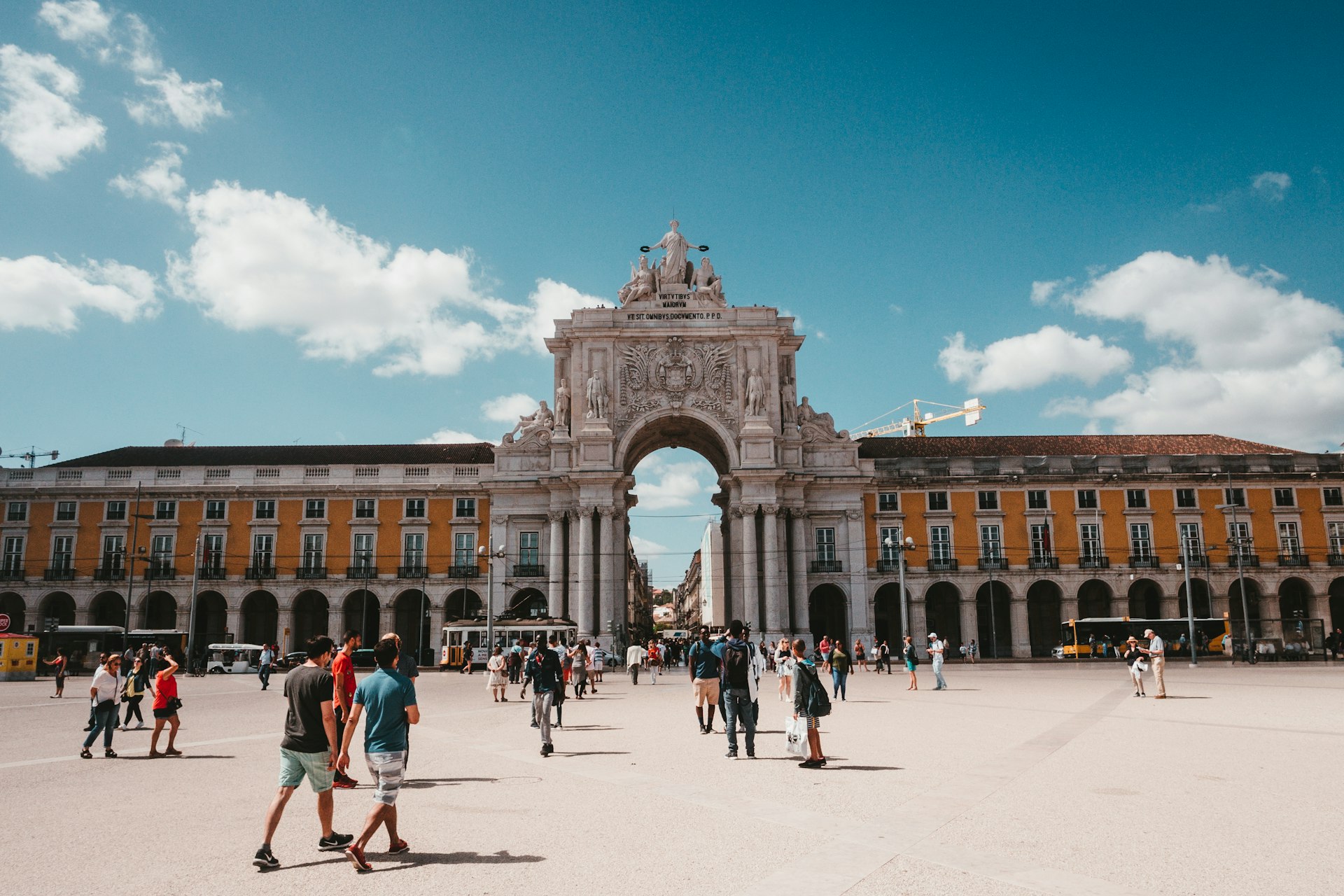
Lisbon is Europe's most loveable capital — a city of vintage trams climbing cobbled hills, azulejo-tiled facades catching the Atlantic light, fado drifting from candlelit tascas, and pastel de nata warm from the oven at Belém.
- Suggested duration: 3–5 days
- Best time to visit: Mar–May & Sep–Oct
- Budget: $$
Lisbon operates on a different set of coordinates from most European capitals. It faces west and south, towards the ocean and the light — a light that painters have always noticed, a particular clarity that comes from the Atlantic and gives the city's white and yellow facades, its tiled walls, and its seven hills a luminosity that photographs struggle to capture. It is also, by the standards of major European capitals, remarkably unhurried — a quality the Portuguese call saudade, a word that means something between nostalgia and longing, and that seems to permeate the city's architecture, its music, and its attitude towards time.
The Alfama: Where the City Began
The Alfama is the oldest quarter of Lisbon and the one that survived the catastrophic 1755 earthquake and tsunami largely intact. Its streets follow a Moorish plan — narrow, steep, irregular — and its tiled houses in shades of blue, yellow, and terracotta climb toward the São Jorge Castle above. The neighbourhood's tascas are among the most honest and satisfying restaurants in the city: petiscos of bacalhau, grilled sardines, and bifanas (pork sandwiches) served at communal tables under strips of faded laundry. Fado — the melancholic Portuguese song form — was born here, and the neighbourhood's smaller fado houses remain more intimate and less theatrical than the tourist versions found elsewhere.
Belém: Monument to the Age of Discovery
The Belém district, four kilometres west of the centre along the Tagus, holds two of Portugal's greatest monuments. The Mosteiro dos Jerónimos — a vast church and monastery in the ornate Manueline style, built to give thanks for Vasco da Gama's successful route to India — is one of the finest Gothic buildings in the world, its stone so elaborately carved it seems to breathe. A few hundred metres away, the Torre de Belém stands in the river itself, a watchtower from which the caravels once departed for unknown oceans. The Pastéis de Belém bakery, which has been making the original pastel de nata custard tart since 1837, is steps away and always worth the queue.
Museums and Neighbourhood Life
Lisbon's museum scene is richer than most visitors expect. The Museu Nacional do Azulejo — housed in a 16th-century convent — offers the definitive account of Portuguese tile-making, with examples from the 15th century to the present day. The MAAT (Museum of Art, Architecture and Technology), in a new riverside building beside a converted power station, represents contemporary Lisbon at its most forward-looking. Between museums, the neighbourhoods of Príncipe Real (antique shops, excellent restaurants, a shaded garden square) and LX Factory (a former industrial complex now housing creative businesses, a Sunday market, and some of the city's best brunch spots) offer a vivid picture of the city's present.
The Miradouros
Lisbon's viewpoints — miradouros — are integral to how the city presents itself. The Miradouro da Graça, the Miradouro de Santa Luzia, the Miradouro da Senhora do Monte — each offers a different angle on the city's rooftops, the river, and the light. The ritual of arriving at a miradouro in the late afternoon with a glass of ginjinha (sour cherry liqueur) from a nearby kiosk and watching the sun lower over the Tagus is one of Lisbon's great pleasures, and one that costs almost nothing.
Practical Notes
- Tram 28 is scenic but very crowded — walk the Alfama hills instead and catch the tram back down
- Spring (March–May) brings warm days, cheaper accommodation, and the jacaranda trees in bloom along Avenida Paulista
- October is excellent: warm sea, festival season (Lisbon Architecture Triennale), and the summer rush entirely gone
- Stay in Príncipe Real or Chiado for the best combination of access, comfort, and neighbourhood character
- Sintra — half an hour by train — makes an essential day trip to a UNESCO-listed landscape of fairy-tale palaces and pine forests
Lisbon is a city best understood on foot, over several days, with no particular urgency. Its rewards are cumulative: the city reveals itself slowly, through repeated encounters with its light, its sounds, and the particular quality of its human warmth.