Mumbai never sleeps, never slows, and never apologises for its contradictions. This is a city of billionaires and street food vendors, of Bollywood glamour and quiet colonial libraries, of the world's most expensive private residence visible from a neighbourhood where a million people live in one square mile. India's financial and cultural capital is the country's most cosmopolitan city, and its energy — equal parts ambition, creativity, and sheer vitality — is like nowhere else on the subcontinent. Give it a few days and it will get under your skin completely.
- Suggested duration: 3–5 days
- Best time to visit: November to February
- Budget: Mid-range: $60–$130/day
Mumbai doesn't ask whether you're ready for it — it simply arrives. The moment you step out of Chhatrapati Shivaji Terminus (one of the world's great Victorian Gothic railway stations, also a UNESCO World Heritage Site), the city envelops you: the dabbawalas threading through the crowd, the smell of vada pav frying, a film poster the size of a building. Embrace the overwhelm and you'll find a city of extraordinary warmth, ambition, and life.
Top Experiences and Highlights
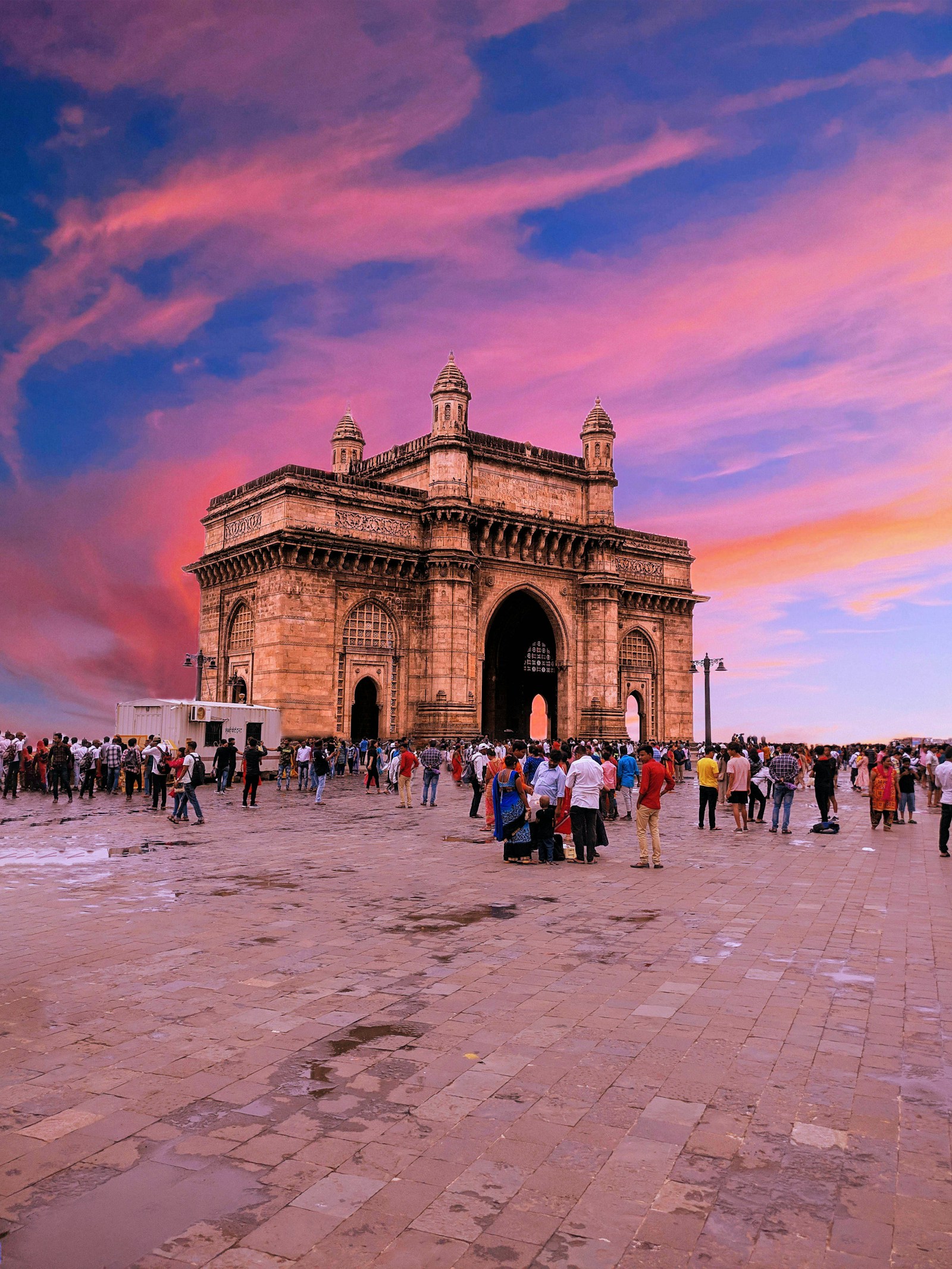
The Gateway of India, built in 1924 to welcome King George V and now the departure point for ferries to Elephanta Island, is the city's great landmark. Marine Drive — the 3.5km arc of reclaimed land curving around Back Bay — earns its nickname, the Queen's Necklace, from the string of streetlights that outlines it at night. Dharavi, one of Asia's largest informal settlements, supports a thriving economy of recyclers, leather workers, and food producers, and responsible guided tours offer a humbling, fascinating perspective on urban resilience.
- Gateway of India: The city's great sandstone arch on the waterfront — at its most atmospheric at dawn before the crowds arrive
- Marine Drive at night: Walk the promenade at 10pm when the lights come on and the sea breeze picks up off the bay
- Elephanta Caves: 5th-century rock-cut Shiva temples on an island one hour by ferry from the Gateway — a UNESCO World Heritage Site
- Dharavi tour: A responsibly run walking tour through one of the world's most entrepreneurial communities
Culture and Heritage
Mumbai's built environment is a love letter to Victorian Gothic, with the High Court, University of Mumbai, and CST station forming a remarkable ensemble known as the Victorian Gothic and Art Deco Ensembles — another UNESCO World Heritage Site. The city has long been India's cultural powerhouse: its art market (around Colaba and the Kala Ghoda district) is the most vibrant in the country, its theatre scene (Prithvi Theatre in Juhu) is nationally respected, and its Bollywood industry produces more films annually than Hollywood.
- Chhatrapati Shivaji Maharaj Terminus (CST): A UNESCO-listed Victorian Gothic railway station that remains one of India's busiest
- Kala Ghoda Arts District: Mumbai's cultural precinct, home to galleries, design studios, and the annual Kala Ghoda Arts Festival
- Mani Bhavan: Gandhi's Mumbai residence, preserved as a moving museum dedicated to his life and philosophy
- Bollywood studio tour: Film City in Goregaon offers guided tours of active movie sets and studios
Food and Cuisine
Mumbai invented street food as performance art. The vada pav — a spiced potato fritter in a soft roll — is the city's soul food, eaten by everyone from office workers to film stars. Bhel puri, pav bhaji (spiced vegetable mash with buttered rolls), and the infinite variety of South Indian tiffin breakfasts compete for your attention at every turn. The restaurant scene is equally extraordinary: from century-old Irani cafes to modern Indian tasting menus at Gaggan-alumni restaurants, Mumbai eats better than almost any other city in Asia.
- Vada pav: Mumbai's beloved street snack — potato fritter, chutneys, and soft roll — the great equaliser of the city
- Pav bhaji: Buttered bread rolls with a rich, buttery vegetable curry, best eaten at Juhu Beach at sunset
- Irani cafes: Legendary old-school cafes (Kyani & Co, Britannia & Co) serving bun maska, chai, and berry pulao
- Colaba Causeway dining: The streets around Leopold Cafe and Trishna offer some of the city's best coastal Konkani seafood
Best Areas and Neighbourhoods
South Mumbai (SoBo) is where the historic landmarks, boutique hotels, and finest restaurants cluster, anchored by Colaba in the south and Bandra-Kurla Complex in the north. Bandra — the city's hippest neighbourhood — has the best cafe culture, street art, and independent boutiques. Juhu, north of Bandra, is the Bollywood belt: beach-facing hotels, film star bungalows, and the sunset bhel puri stalls that constitute a Mumbai rite of passage.
- Colaba: The tourist heart of South Mumbai — Gateway of India, boutique hotels, Colaba Causeway market
- Bandra West: Mumbai's coolest neighbourhood, with excellent restaurants, cafes, street art, and a beautiful seafront promenade
- Fort and Kala Ghoda: Colonial heritage architecture, galleries, excellent bookshops, and the city's best upmarket restaurants
- Juhu Beach: The beach suburb beloved by Bollywood — sunsets, street food, and a festive, local atmosphere
Practical Tips
Mumbai's local train network is the city's circulatory system — it runs 24/7 and connects every neighbourhood, but becomes genuinely dangerous crowded during rush hour (8–10am, 6–9pm). Stick to the Ladies Carriage during peak times, or use the AC local trains for slightly more comfort. Taxis and Uber/Ola are abundant and affordable by Western standards. The monsoon (June–September) turns the city dramatically atmospheric but can disrupt transport; July is peak rainfall.
- Local trains: Avoid rush hour; the Western and Central lines connect all key areas cheaply and quickly
- Taxis: Black-and-yellow kaali-peelis are an authentic experience; Uber and Ola are easier for non-Hindi speakers
- Monsoon travel: June–September brings dramatic rains — pack a compact umbrella and waterproof sandals
- Colaba at night: Leopolds, Yacht Club, and rooftop bars around Nariman Point are safe and atmospheric evening options