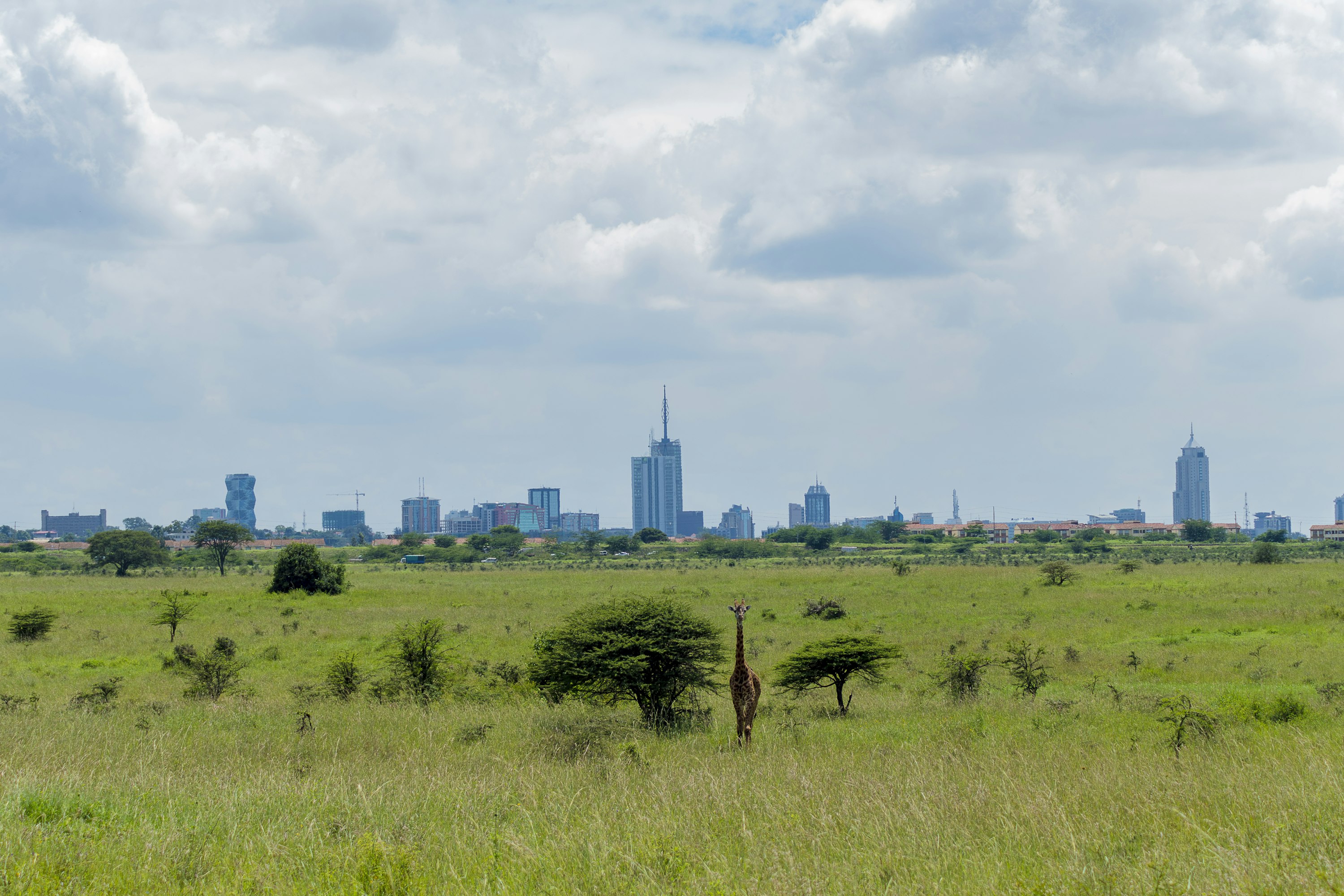
Nairobi is the only city in the world with a national park on its doorstep — a fact that tells you everything about what makes Kenya's capital so singular. While lions roam the golden grasslands within sight of the CBD, the city itself pulses with East Africa's most dynamic tech scene, food culture, and creative energy. It is a gateway to the continent's greatest safari destinations, but increasingly a compelling destination in its own right.
- Suggested duration: 3–5 days
- Best time to visit: June to October
- Budget: Mid-range: $80–$160/day
Nairobi confounds expectations at every turn. This is a city where you can feed a giraffe at breakfast, visit a Maasai market at noon, eat extraordinary Nyama Choma in a roadside restaurant at dusk, and dance in a rooftop bar that rivals anything in London or New York by night. It is chaotic, creative, occasionally frustrating, and utterly irresistible — the natural staging point for East Africa's greatest adventures.
Top Experiences & Highlights
Nairobi's unique combination of urban energy and wild Africa is what sets it apart from any other capital city on earth. Make time for both dimensions and you'll leave with memories that last a lifetime.
- Take an early morning game drive in Nairobi National Park — just 7km from the CBD — where lions, rhino, buffalo, and leopard roam against a backdrop of city skyscrapers
- Feed Rothschild's giraffes by hand at the Giraffe Centre, home to one of the world's most endangered giraffe subspecies
- Visit the David Sheldrick Wildlife Trust elephant orphanage for the morning feeding hour — an overwhelming experience for animal lovers
- Browse the Maasai Market, a rotating weekly market where artisans from across Kenya sell beadwork, carvings, textiles, and jewellery
Culture & History
Nairobi was born as a British colonial railway depot in 1899 and has grown into the economic and cultural capital of East Africa at breathtaking speed. Its population is young, educated, entrepreneurial, and fiercely proud — and the city's cultural institutions reflect a society telling its own story on its own terms.
- The Nairobi National Museum houses outstanding collections covering Kenya's natural history, tribal heritage, and the work of Karen Blixen and Joy Adamson
- The Karen Blixen Museum in the leafy suburb of Karen preserves the farm that inspired Out of Africa — a beautifully maintained colonial homestead
- The Nairobi Railway Museum tells the story of the "Lunatic Line" — the British-built Uganda Railway that created the city — with original locomotives and fascinating colonial-era artefacts
- Westgate Mall and the newer Two Rivers Mall anchor the city's impressive retail and dining scene; Nairobi is the shopping capital of East Africa
Food & Cuisine
Nairobi's food scene has transformed over the past decade from post-colonial blandness into one of Africa's most exciting culinary cities. The city's extraordinary diversity — Kikuyu, Luo, Luhya, Kamba, Somali, Indian, and expatriate communities all have a strong presence — has produced a food culture of genuine depth and variety.
- Nyama Choma (roasted goat or beef) is Kenya's unofficial national dish, best eaten at a roadside joint in Westlands with cold Tusker beer
- Carnivore Restaurant in Langata is a legendary all-you-can-eat meat feast, roasting game meats over a giant central fire pit — a Nairobi institution since 1980
- Explore the Somali restaurants of Eastleigh for extraordinary camel milk tea, anjero flatbreads, and rich Somali pasta dishes
- The Westlands and Kilimani neighbourhoods are home to Nairobi's most creative restaurant scene, from wood-fired pizza to innovative modern Kenyan cuisine
Best Neighbourhoods & Areas
Nairobi is a sprawling, traffic-heavy city where neighbourhood choice has a significant impact on your experience. Staying in the right area saves hours of frustration and opens up very different sides of the city.
- Westlands — Nairobi's most vibrant dining and nightlife district, with excellent international restaurants, bars, and the Sarit Centre; best base for most visitors
- Karen / Langata — leafy, quiet, and close to the Giraffe Centre and David Sheldrick Trust; ideal for wildlife-focused visitors and families
- Kilimani — a residential neighbourhood rapidly filling with boutique hotels, excellent cafes, and international restaurants
- CBD / Upper Hill — convenient for business travellers and the national museum, but less atmospheric for leisure visitors
Practical Tips
Nairobi traffic is genuinely challenging — the city has some of the worst congestion in sub-Saharan Africa. Plan your days to minimise cross-city travel during rush hours, and give yourself more time than you think you need for every journey.
- Book Nairobi National Park game drives for 6am — dawn is when lion activity peaks and the light is extraordinary for photography
- The David Sheldrick elephant orphanage operates on a strict 11am viewing window — book well in advance as spaces are limited
- Use Uber and Bolt rather than street taxis; they are safer, metered, and widely available
- Altitude (Nairobi sits at 1,795 metres) can cause mild breathlessness on arrival — take it easy for the first day