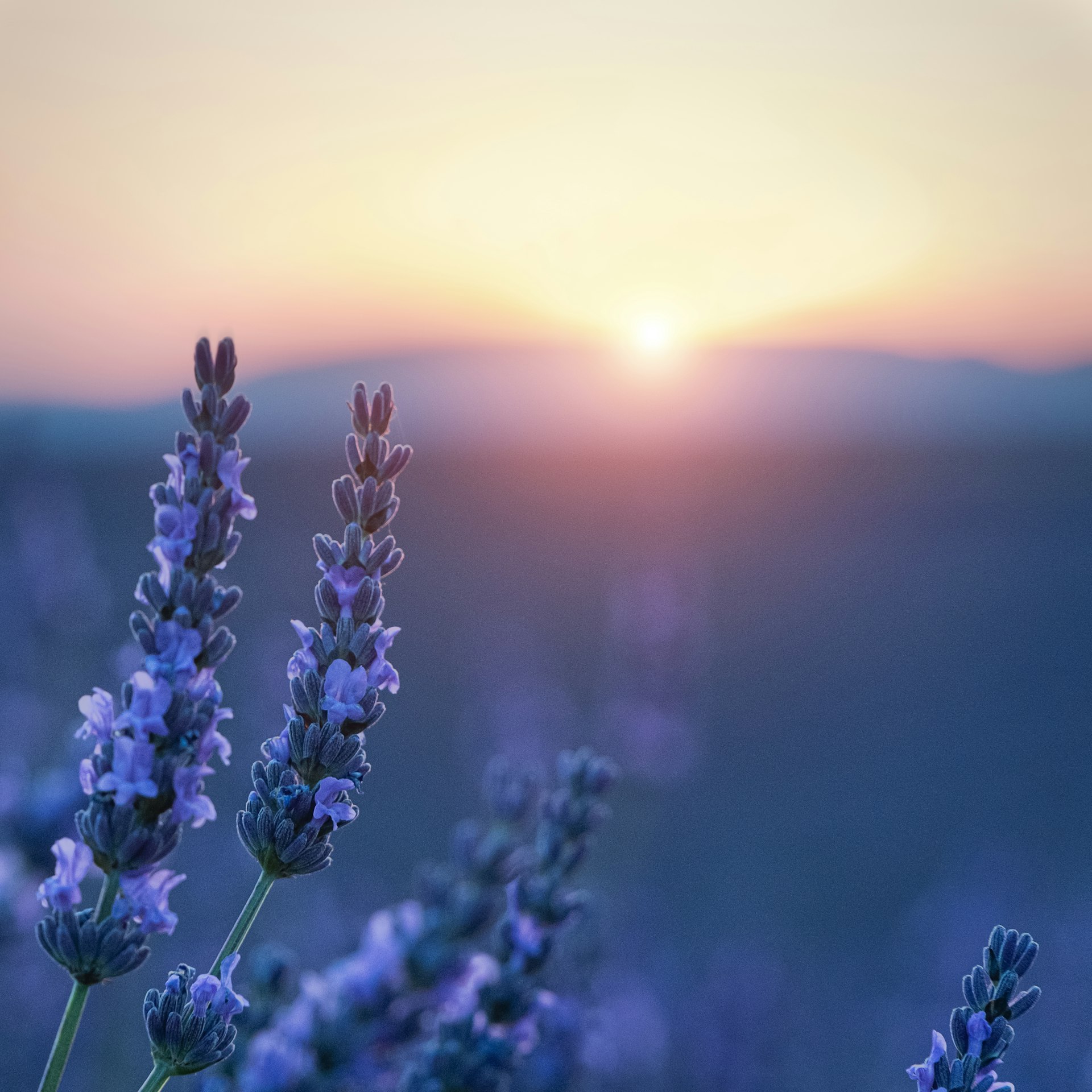
Lavender-scented air, perched hilltop villages bleached by centuries of summer sun, rosé poured without ceremony at noon — Provence is southern France at its most sensory and most seductive.
- Suggested duration: 5–7 days
- Best time to visit: Jun–Jul & Sep
- Budget: $$$
Provence has always attracted people in search of something: Cézanne sought its geometry of light and limestone; Van Gogh its colour; Peter Mayle its unhurried pleasures. Today's visitor finds all of the above, distilled into a landscape that operates at a tempo entirely its own. The Mistral sweeps the sky to a blue of impossible purity. Lavender fields roll across the Plateau de Valensole in rows of purple and grey. And in the markets of Apt, Aix-en-Provence, and Isle-sur-la-Sorgue, the abundant produce of the south — tomatoes, melons, olives, fresh goat's cheese — is displayed with an artistry that suggests the region has never quite distinguished between food and beauty.
The Luberon: Villages on the Vertical
The Luberon massif shelters a chain of perched villages that are among the most painterly in France. Gordes, clinging to its cliff face above the Imergue valley, is probably the most photographed — arrive early, before the coach parties, to catch its ochre facades in the morning light. Ménerbes, Les Baux-de-Provence, Bonnieux, and Lacoste each have their own character and their own commanding views. The ancient Abbaye de Sénanque, surrounded by lavender and often shrouded in early mist, is one of Provence's most affecting images. Rent a villa in the Luberon for a week and use it as your base for lazy cycling days and serious lunches.
- Gordes is best before 9am or after 6pm — it transforms when the day-trippers leave
- The Abbaye de Sénanque lavender is typically in bloom late June to mid-July
- Isle-sur-la-Sorgue on Sunday morning hosts one of France's finest antiques markets
Avignon and the Papal Legacy
For 68 years in the 14th century, Avignon was the centre of Christendom. The Palais des Papes — the largest Gothic building in the world — still dominates the city with a presence that feels simultaneously medieval and monumental. The adjacent Rocher des Doms gardens offer the finest views over the Rhône. The famous Pont Saint-Bénezet (the Pont d'Avignon of the nursery rhyme) extends halfway across the river, testament to the town's complex relationship with its own mythology. Every July, the Festival d'Avignon transforms the city into the world's most exciting theatre festival, occupying every courtyard, cloister, and square.
Aix-en-Provence: Elegance in the Heat
Aix is Provence's most urbane expression — a university city of grand fountains, plane-tree-shaded cours, and exceptional food markets. The Cours Mirabeau, flanked by 17th and 18th-century hôtels particuliers and moss-covered fountains, is one of France's great promenades. Cézanne was born here and obsessively painted the Montagne Sainte-Victoire that anchors the horizon to the east; his studio, preserved exactly as he left it, is a pilgrimage for anyone who loves his work. The daily market on the Place Richelme remains one of Provence's most authentic, a contrast to the more touristic markets of the Luberon.
Rosé, Lavender, and the Provençal Table
Provence produces more rosé than any other region in France, and the best — pale, dry Bandol rosé from Domaine Tempier, or the estate wines of the Chateau Sainte-Roseline — are as serious as any red or white. The cuisine is Mediterranean in its bones: olive oil, garlic, herbs de Provence, fresh fish from Marseille, and the great bouillabaisse — which should be eaten only in Marseille itself, at a restaurant that adheres to the traditional charter of ingredients. Truffles, when in season, elevate every dish; the market at Richerenches in winter is where France's black gold changes hands at dawn on Saturday mornings.
Light, Season, and Pace
June and early July offer the lavender bloom and long warm evenings without August's crowds and heat. September is arguably finer still: the harvest is under way, the light has a golden depth that painters understand, and the villages recover a quieter, more authentic rhythm. Fly into Marseille or Avignon, hire a car, and surrender to the region's most insistent invitation: to slow down, eat well, and look at things properly.